

Tennessee Whiskey is a distinct product of Tennessee, the Volunteer State, and 16th state to join the nation on June 1, 1796. Tennessee is best known for barbecue, Nashville hot chicken, moon pies and their world-famous Tennessee Whiskey.
What makes Tennessee whiskey unique is its use of the Lincoln County Process which is often referred to as charcoal mellowing. The charcoal mellowing process is a unique step taken during the production process. After distillation, before the new make whiskey is placed in a barrel for maturation, the new make whiskey or white dog runs through a layer of sugar maple charcoal. Running the white dog through charcoal is not additive, it is a subtractive process just like the ice maker in your refrigerator that uses a charcoal filter to clarify your cubes. Nothing is added but certain elements are stripped out.
Is Tennessee Whiskey Bourbon? The U.S. Government Said it is in 1992
A common question often asked and often up for debate is whether Tennessee whiskey is bourbon. There are opinions and there is the law. We’ll focus our context here on what the law says and what some of the distillers say about the process.
Let’s take a look at the difference between bourbon, which can be made in any U.S. state and Tennessee whiskey, which can only be made in the state of Tennessee. The majority of things are identical but there is one key addition when making Tennessee Whiskey. We set this chart up using the ABCs of bourbon description — A=American, B=Barrels, C=Corn, D=Distilled Proof, E=Entry Proof, F=Fill Proof, G=Genuine.
The short answer is Tennessee Whiskey follows all the rules of Bourbon Whiskey with one small but unique addition to the process.
| What is Bourbon? | What is Tennessee Whiskey? | ||
|---|---|---|---|
| American: Must be produced in the United States. | 
| Tennessee: Must be distilled and aged n Tennessee. |
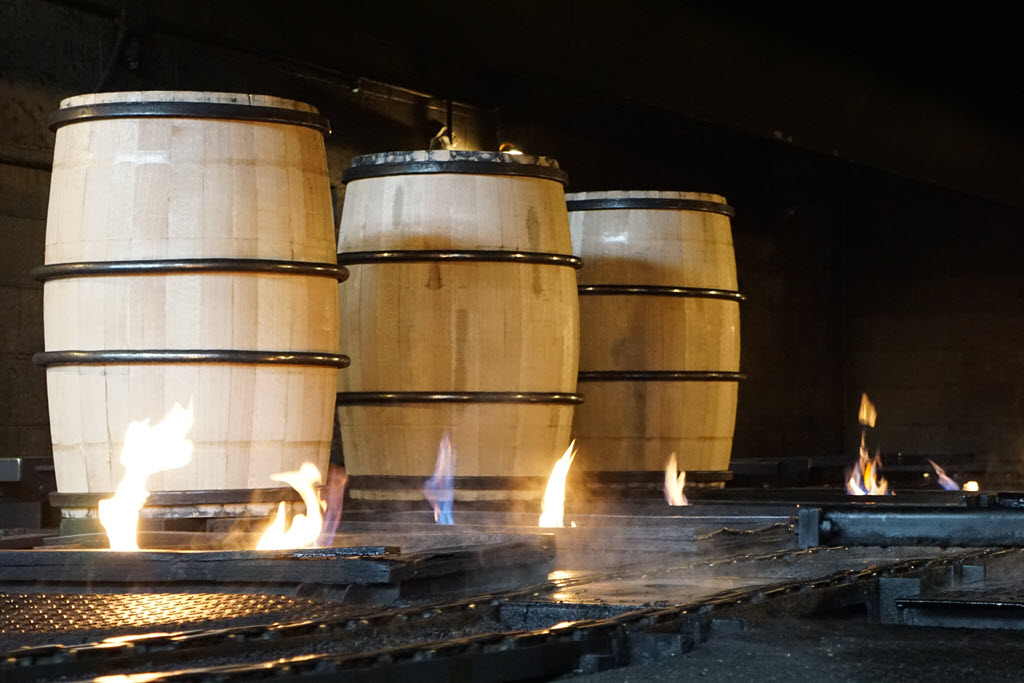
| Barrels: Must be stored in a new charred oak container. | 
| |
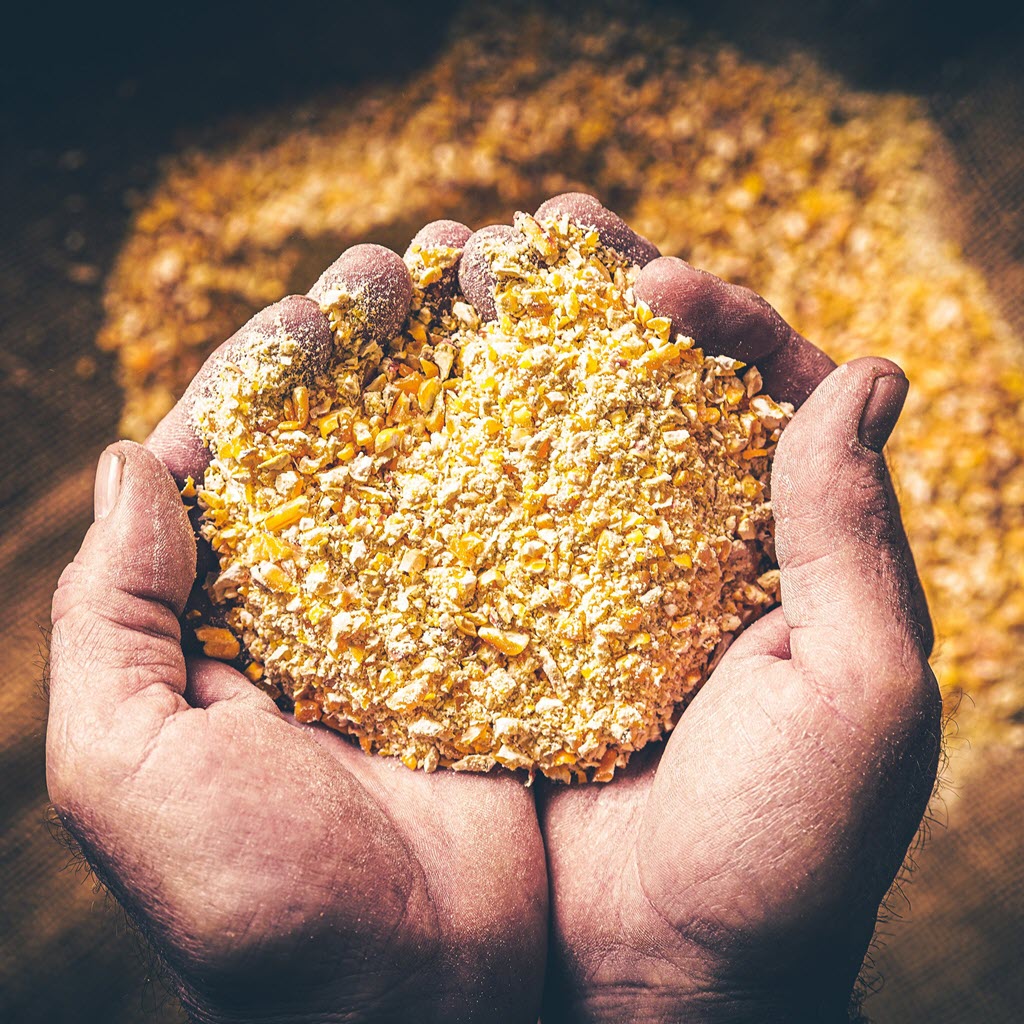
| Corn: Must be made from a fermented mash of not less than 51% corn. |
| |

| Distilled Proof: May not exceed 160 Proof (80% Alcohol by Volume) during the distillation process. |
| |

| Entry Proof: Barreled at not more than 125 proof (62.5% Alcohol by Volume). |
| |

| Filled Bottle Proof: Bottled at a minimum of 80 Proof (40% Alcohol by Volume). |
| |

| Genuine: No color or flavoring agents may be added. |
| |

| Lincoln County Process: Must pass through Sugar Maple Charcoal after distillation and before barreling. |
Stay Informed: Sign up here for the Distillery Trail free email newsletter and be the first to get all the latest news, trends, job listings and events in your inbox.
The Alcohol and Tobacco Tax and Trade Bureau – TTB, which is the governing body for distilled spirits in the US, has a very specific definition for bourbon but a search for the TTBs definition for Tennessee whiskey comes up blank, nada, zip. The TTB does not officially recognize Tennessee Whiskey. It treats Tennessee whiskey like its bourbon which it is, but it’s not. Clear?
There are three U.S. government major documents, outside of the TTB, that officially define what Tennessee whiskey is.



The North American Free Trade Agreement (NAFTA) Defines ‘What is Tennessee Whiskey’
The North American Free Trade Agreement (NAFTA) was signed into law on December 8, 1993, and entered into force on January 1, 1994. The NAFTA agreement includes an Annex, a separate but legal part of the agreement, that includes three paragraphs to protect Bourbon and Tennessee Whiskey.
NAFTA calls Tennessee Whiskey a straight bourbon with the phrase, “Tennessee Whiskey, which is a straight Bourbon Whiskey authorized to be produced only in the State of Tennessee.”
Here is the Annex as it relates to NAFTA and distilled spirits.
Annex 313 – Distinctive Products
1. Canada and Mexico shall recognize Bourbon Whiskey and Tennessee Whiskey, which is a straight Bourbon Whiskey authorized to be produced only in the State of Tennessee, as distinctive products of the United States. Accordingly, Canada and Mexico shall not permit the sale of any product as Bourbon Whiskey or Tennessee Whiskey, unless it has been manufactured in the United States in accordance with the laws and regulations of the United States governing the manufacture of Bourbon Whiskey and Tennessee Whiskey.
2. Mexico and the United States shall recognize Canadian Whisky as a distinctive product of Canada. Accordingly, Mexico and the United States shall not permit the sale of any product as Canadian Whisky, unless it has been manufactured in Canada in accordance with the laws and regulations of Canada governing the manufacture of Canadian Whisky for consumption in Canada.
3. Canada and the United States shall recognize Tequila and Mezcal as distinctive products of Mexico. Accordingly, Canada and the United States shall not permit the sale of any product as Tequila or Mezcal, unless it has been manufactured in Mexico in accordance with the laws and regulations of Mexico governing the manufacture of Tequila and Mezcal. This provision shall apply to Mezcal, either on the date of entry into force of this Agreement, or 90 days after the date when the official standard for this product is made obligatory by the Government of Mexico, whichever is later. Source: ITA – International Trade Administration
What is interesting here is Tennessee Whiskey is defined as bourbon made in Tennessee. There is no mention of the Lincoln County Process or what makes Tennessee Whiskey unique.
Tennessee House Bill 1084 Defines ‘What is Tennessee Whiskey’
The state of Tennessee via House Bill 1084 was signed into law by Governor Bill Haslam on May 21, 2013, and entered into force on July 1 of the same year. HB 1084 officially identifies Tennessee Whiskey as a product that must be made in the state of Tennessee and follow the rules of bourbon with the addition of the Lincoln County Process.
Here is a detailed breakdown of Tennessee Whiskey according to The Volunteer State legislature. The ruling uses the phrase, “Filtered through maple charcoal prior to aging” but it does not technically call it the Lincoln County Process (LCP).
Tennessee House Bill 1084 – 108th General Assembly (2013-2014)
Bill Summary
ON APRIL 8, 2013, THE HOUSE ADOPTED AMENDMENT #1 AND PASSED HOUSE BILL 1084, AS AMENDED.
AMENDMENT #1 adds to this bill that an intoxicating liquor may not be advertised, described, labeled, named, sold or referred to for marketing or sales purposes as “Tennessee Whiskey”, “Tennessee Whisky”, “Tennessee Sour Mash Whiskey” or “Tennessee Sour Mash Whisky” unless the intoxicating liquor is:
(1) Manufactured in Tennessee;
(2) Made of a grain mixture that is at least 51 percent corn;
(3) Distilled to no more than 160 proof or 80 percent alcohol by volume;
(4) Aged in new, charred oak barrels in Tennessee;
(5) Filtered through maple charcoal prior to aging;
(6) Placed in the barrel at no more than 125 proof or 62.5 percent alcohol by volume; and
(7) Bottled at not less than 80 proof or 40 percent alcohol by volume.
Any manufacturer who violates this bill as amended will be subject to suspension or revocation of its license for a period of not less than one year.
This amendment specifies that the requirement referenced above in (5) will not apply to intoxicating liquor manufactured at a distillery located in a county that authorized the manufacturing process by referendum after January 1, 1979, and prior to January 1, 1980; provided, however, that any such distillery was first licensed by the state alcoholic beverage commission after January 1, 2000, and before January 1, 2001.
This amendment specifies that any Tennessee corporation, limited liability company or proprietorship that holds a federal distiller basic permit and had a licensed manufacturing operation in this state as of January 1, 2013, may label, market and sell any product owned or contracted to purchase by such permit holder on or after the effective date of the bill for a period of 36 months, as long as any product manufactured at such distillery after such date meets the requirements of this amendment to be advertised, described, labeled, named, sold or referred to for marketing or sales purposes as “Tennessee Whiskey”, “Tennessee Whisky”, “Tennessee Sour Mash Whiskey”, or “Tennessee Sour Mash Whisky”. This provision would apply to any product that is referred to as “Tennessee Whiskey”, “Tennessee Whisky”, “Tennessee Sour Mash Whiskey”, or “Tennessee Sour Mash Whisky” under federal regulations on the effective date of the bill.
ON APRIL 10, 2013, THE SENATE SUBSTITUTED HOUSE BILL 1084 FOR SENATE BILL 1195, ADOPTED AMENDMENT #1, AND PASSED HOUSE BILL 1084, AS AMENDED.
AMENDMENT #1 removes authorization for any Tennessee corporation, limited liability company or proprietorship that holds a federal distiller basic permit and had a licensed manufacturing operation in this state as of January 1, 2013, to label, market and sell any product owned or contracted to purchase by such permit holder on or after July 1, 2013, for a period of 36 months, as described in the summary for House Amendment #1.
Are There Any Exceptions to this Ruling?
Yes, there is one exception to Tennessee Whiskey using The Lincoln County Process. Pritchard’s Distillery, ironically in Lincoln County, Tennessee, has been using the name Tennessee Whiskey since the distillery was founded in 1997. When the TN legislature was establishing the rules for The Lincoln County process Pritchard Distillery petitioned the state to say they had been using the phrase long before it became law. Based on this, Pritchard was allowed an exception to the TN law.
The United States-Mexico-Canada Agreement (USMCA) Defines ‘What is Tennessee Whiskey’ (Again)
The U.S.- Mexico- Canada Agreement (USMCA) was signed on November 30, 2018, and entered into force on July 1, 2020. The USMCA updated the previous NAFTA trade agreement between the three countries from 1994.
When the USMCA agreement was signed Bourbon and Tennessee Whiskey were still in there but the text identifying Tennessee Whiskey as a ‘bourbon made in Tennessee’ was removed. Here’s how USMCA defines Tennessee Whiskey and distilled spirits.
Chapter Three: Agriculture
Chapter Three and its annexes contain commitments related to trade in agricultural products.
Distinctive Products.
The Parties agree to continue recognition of Bourbon Whiskey, Tennessee Whiskey, Tequila, Mezcal, and Canadian Whisky as distinctive products.
Distilled Spirits, Wine, Beer, and Other Alcohol Beverages Annex.
This annex contains nondiscrimination, transparency, and due process commitments regarding the internal sale and distribution of alcohol beverages, including beer. The Parties agree to labeling and certification provisions that will help the Parties avoid barriers to trade in wine and distilled spirits.
How Do Tennessee Distilleries Define ‘What is Tennessee Whiskey’ and the ‘Lincoln County Process’?
Now that the Tennessee legislature has defined what Tennessee Whiskey is, let’s take a look at how some of the heritage and craft distillers define their version of Tennessee Whiskey and the Lincoln County Process in practice. Thankfully, the states definition is a guideline that puts everyone on the same playing field but, there is also room for innovation that allows distillers, large or small, to do it their own way.
How Does Jack Daniel Distillery Define the ‘Lincoln County Process’?


Here is how the Jack Daniel Distillery describes Tennessee Whiskey and the Lincoln County Process, a process they call charcoal mellowing.
“We Hold Charcoal in a Higher Regard. Starting a massive fire would get you in a heap of trouble at most jobs. But at the Jack Daniel Distillery, it’s an essential part of what we do. If we didn’t start with fire, we wouldn’t get the fine smooth sippin’ Tennessee Whiskey that follows.”
How Does Jack Daniels Create Their Charcoal?
“Three days a week, three times a day, we stack pallets of hard sugar maple five feet high and douse them in raw unaged whiskey before setting the wood ablaze. It might seem like a waste of perfectly good whiskey, but we don’t see anything as a waste when it comes to making Jack Daniel’s. The inferno peaks at over 2,000 degrees Fahrenheit before burning down into smoldering embers. These pellets are then raked over until finally cool and ready to slowly mellow our Tennessee Whiskey.
How Does the Lincoln County Process Make Jack Daniel’s Better?
“Charcoal Mellowing. The Extra Blessing. Every drop is well worth the effort. There are lots of things that make Jack Daniel’s different. A black label. A square bottle. You might be surprised to learn the biggest thing that makes our whiskey unlike any other is the fact that every drop passes through ten feet of sugar maple charcoal before it sees the inside of a barrel.
“Folks have used all kinds of names for our most important step. The state of Tennessee recognizes it as the “Lincoln County Process.” Most tend to call it “charcoal mellowing.” But down in Lynchburg, it’s simply known as the “extra blessing.”
“Back in Jack’s day, most distillers in and around Lynchburg charcoal mellowed their whiskey. But after the Civil War, wood (like everything else) was hard to come by, and nearly all of them decided they could do without this costly and time-consuming extra step. To Jack, though, this was a simple matter of black and white: if something made for a better whiskey that was all he needed to know. He insisted on keeping this old-time process and it has been in continuous use by the Jack Daniel’s Distillery every since.
“So, once distilled to 140-proof, we send our clear, un-aged whiskey on a painstaking journey. Drop by drop, it crawls through our handcrafted charcoal at a pace dictated by gravity and nothing else. The trip takes 3-5 days to complete and once it’s done, the whiskey is transformed. Might even say blessed.”
How Does Cascade Hollow Distilling Co. (AKA: George Dickel Distillery) Define the ‘Lincoln County Process’?


A tour of the George Dickel Distillery, now known as Cascade Hollow Distilling Co., tells the story through a few boards on the walls around the distillery.
Charcoal Mellowing
“George Dickel’s Discovery…
George Dickel knew that it was CHARCOAL MELLOWING which distinguished his whisky from all others. Yet, in his quest for PERFECTION, he discovered that the whisky he made in the winter was SMOOTHER and more MELLOW than that made in the hot Tennessee summers.
“Our learning from the past…
To ensure our whisky is as SMOOTH and MELLOW as the original, we have perfected the unique technique of COLD CHILLING. Only when the whisky is good and cold is it allowed to seep slowly through the charcoal. And to ensure a slow, uniform flow, only we layer our mellowing vats with VIRGIN WOOL BLANKETS.
Charcoal Ricks
“In Tennessee we do things a little differently…
What separates TENNESSEE WHISKEY from all others is the meticulous care taken after distillation when the whiskey is allowed to seep slowly through specially prepared vats of SUGAR MAPLE CHARCOAL.
“At George Dickel we do things to perfection…
Our sugar maple logs come from trees felled only in the WINTER, when the sap is low. They are first cut, then stacked into ricks, and burned in the open air to make the charcoal which imparts to our whiskey its exquisite smoothness.”
How Does AJ Bond Distillery Define the ‘Lincoln County Process’?
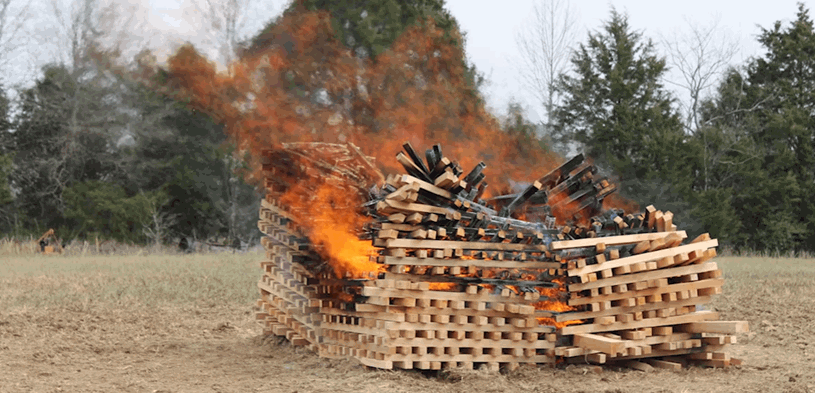
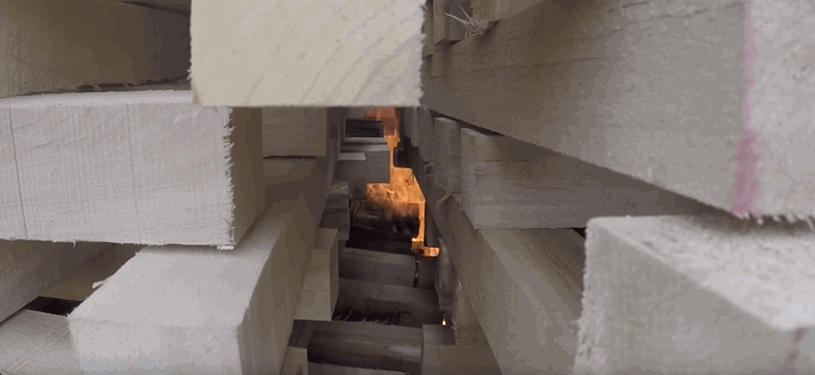

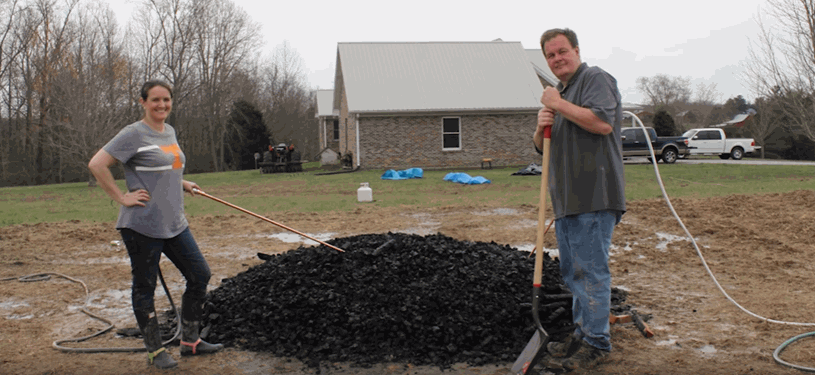
The AJ Bond Distillery in LaVergne, Tennessee, is owned by Sazerac. It is the company’s first foray into Tennessee Whiskey led by Master Distiller Allisa Henley and the late John Lunn. Henley learned the whiskey making process from nearly 20 years at the George Dickel Distillery under the tutelage of Lunn. Not surprisingly, AJ Bond uses a process similar to Dickel but on a smaller scale.
Henley and Lunn started out nearly 10 years ago burning their own hard sugar maple in Lunn’s back yard and the rest as they say is now history. AJ Bond just released their first Tennessee Whiskey in June 2026 with several variants that will also use the Lincoln County Process in the pipeline that will be released over the next several years.
How Does Nelson’s Green Brier Distillery Define the ‘Lincoln County Process’?


Distillers of all sizes from the big companies to the smaller craft distilleries all follow the Lincoln County Process in order to label their products Tennessee Whiskey. Here’s how Nelson’s Green Brier Distillery in Nashville, describes the process.
“Once whiskey is distilled, it’s time to officially make it Tennessee Whiskey. In order for it to be called TN Whiskey rather than just any old whiskey, it must go through what is called the Lincoln County Process. It’s a simple, yet effective, technique that gives Tennessee Whiskey its characteristic smoothness and clean mouthfeel.
“Charcoal is the key ingredient in the Lincoln County Process. The raw white whiskey is simply filtered through sugar maple charcoal as a way to take some of the edge off. The porous charcoal absorbs some of the harshness of the fresh distillate while giving it a nice mellow flavor.
“Charles Nelson once said, “The charcoal mellowing process removes some of the heating elements that cause an unpleasant farewell. However, all Whiskey can cause an unpleasant farewell when consumed in too large of quantities…”
What Does the Lincoln County Process Actually Do?
People often say that the Lincoln County Process adds sweetness or a smoky flavor to the whiskey. Technically, charcoal mellowing doesn’t add anything, but it does take things away which can make other things stand out. According to a study from the “Department of Food Science, University of Tennessee” we now know what is happening during the process.
Here is the abstract from the results of that study from UT.
Changes in Tennessee Whiskey Odorants by the Lincoln County Process
Trenton Kerley 1, John P Munafo Jr 1
Affiliations Expand
PMID: 32845138 DOI: 10.1021/acs.jafc.0c03058
Abstract
“Authentic freshly distilled Tennessee whiskey is filtered through maple charcoal in a processing step known as the Lincoln County Process (LCP). Changes in odorants resulting from the LCP were characterized by a comparative aroma extract dilution analysis (cAEDA), quantitated by stable isotope dilution assays (SIDA), and odor activity values (OAVs) were calculated.
“Sensory evaluation showed a decrease in malty, rancid, fatty, and roasty aroma attributes of the distillate after LCP treatment. Forty-nine odorants were identified, nine of which have not been previously reported in the whiskey distillate literature. Thirty-one odorants were quantitated, all showing a decrease in concentration as a result of LCP treatment. Odorants, including (2E,4E)-nona-2,4-dienal (fatty), 3-methylbutanoic acid (rancid), 2′-aminoacetophenone (foxy), and 2-acetyl-1-pyrroline (roasty), dropped below detection thresholds (OAV < 1) following LCP treatment. Concentrations of lipid-derived aldehydes, organic acids, and other odorants decreased between 13 and >99%. The present investigation lays the groundwork for future studies aimed at flavor optimization for Tennessee whiskey production.”
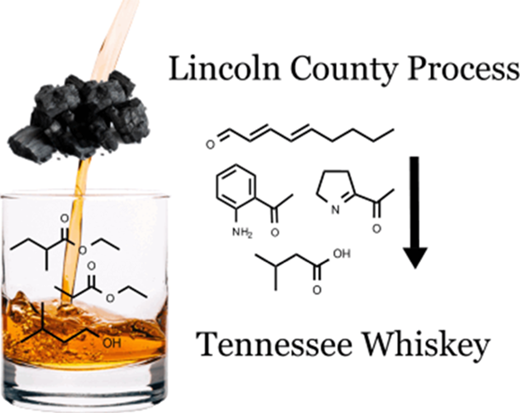
Now we know what makes Tennessee Whiskey and the Lincoln County Process a unique process only allowed in the state of Tennessee. Now it’s time to pour a glass of your favorite Tennessee Whiskey and enjoy. Cheers!
Learn more about AJ Bond Distillery.
Learn more about Cascade Hollow Distilling Co.
Learn more about Jack Daniel Distillery.
Learn more about Nelson’s Green Brier Distillery.
Learn more about Pritchard’s Distillery.
View all Tennessee Distilleries.
View all US Distilleries.
Please help to support Distillery Trail. Sign up for our Newsletter, like us on Facebook and follow us on Instagram and Twitter.